Showing posts with label classics. Show all posts

Wednesday, December 17, 2025

Book Review: Around the World in Eighty Days by Jules Verne

Around The World In 80 DaysAround The World In 80 Days by Jules Verne
My rating: 3 of 5 stars

The second half of the 19th Century saw the world shrink for those living and fantastic speculation began to be put forth about how long it would take with improved modes of transportation to go around the Earth. Around the World in Eighty Days is one of Jules Verne’s most well-known works that follows the adventurous journey of Phileas Fogg and his servant Passepartout along with Detective Dix and Aouda who join them under various circumstances.

In a short 208 pages, Verne introduces us to our two protagonists, sets up the fantastical journey, and allows us to follow along they and additional companions attempt to get around the Earth within a specific timeframe. I wasn’t expecting the characters to be a layered, but I was surprised we had as much insight into a few of them as we did. The journey itself is filled with cliched scenes of riding an elephant in India, a Native American attack on a train while crossing the Great Plains, as well as characters—well one most of the time—doing things like the locals. The main protagonist is very English, the love interest has a tragic backstory and fawns over her rescuer, the comedic sidekick does funny stuff, and the letter-of-the-law police detective antagonist is honorable though mistaken; all the boxes were checked. Honestly, this was a quick fun read and is a classic for a reason.

Around the World in Eighty Days provides an enjoyable experience when reading, it’s a classic adventure tale chalk full of stock characters and cliché scenes but fit the time and became timeless just for that reason.

View all my reviews

Monday, May 27, 2024

Book Review: Treasure Island by Robert Louis Stevenson

Treasure IslandTreasure Island by Robert Louis Stevenson
My rating: 5 of 5 stars

An old sailor with a secret map, the adolescent boy who finds it, and the voyage to find the buried treasure with ship filled with pirates who had helped take it, the classic tale that has inspired daydreams for centuries. Treasure Island by Robert Louis Stevenson is the quintessential pirate treasure adventure story that has been a staple in pop culture since it was published.

As a kid I watched several adaptations of this book, but it turns out they never really followed the book—at least from what I can remember of them. Upon finishing this book, I instantly knew why it became such a classic and secured a place in the cultural zeitgeist. While I could really nitpick various things like I do other books like it’s something that annoyed me, honestly it wouldn’t affect my rating so I really don’t know if I should but the fact that after Jim Hawkins was able to steal the ship back from the pirates and everyone thought less of him because “he didn’t do his duty” because he left the fort, I mean he took the ship back while they were scared in the fort—jealousy hiding behind “duty” it looks to me. Anyway, this is a classic book that holds up for me and frankly if you haven’t read it yet don’t wait and do so.

Treasure Island is a classic coming-of-age adventure with pirates(!) that I needed to have read sooner in my life.

View all my reviews

Sunday, April 21, 2024

Book Review: The Innocents Abroad by Mark Twain

The Innocents Abroad (Dover Value Editions)The Innocents Abroad by Mark Twain
My rating: 4 of 5 stars

So, what happens when a humorous writer from the West Coast joins a bunch of East Coasters tourists on a tour of the France, Italy, Greece, the Holy Land, and Egypt in 1867? The Innocents Abroad by Mark Twain is a humorous travelogue detailing the author’s five month “pleasure excursion” on both land and sea.

Noting his observations and critiques of not only his adventures, but his fellow passengers, those locals that he’s met, and his expectations, Twain took everything to task so likely to the frustration of his fellow passengers. Twain’s humor isn’t over-the-top instead it is subtle and slowly builds thematic jokes until hitting the perfect one to finish the thread on then letting it go—unlike some comedians that can’t think of new material. This narrative nonfiction account has it all with minute detail of how the trip begins, excitement on finally getting to a foreign location, annoyance with everyone tell you the same nonsensical factoid all the time, watching our fellow travelers taking souvenirs by breaking pieces off stuff, realizing all the money you spent of travelogues to let you know what to expect would have been better in your pocket, and not caring one bit what happened on the way home because you just want to get there. As my previous Twain reads were short stories in high school or the serious historical fiction Joan of Arc, I didn’t know what to expect going in and I came out very happy after reading it.

The Innocents Abroad is a humorous look at a journey from the United States to Europe and the Holy Land from the viewpoint of Mark Twain. Upon finishing it you’ll realize why it was Twain’s bestselling book during his lifetime.

View all my reviews

Tuesday, October 3, 2023

Book Review: Jane Eyre by Charlotte Bronte

Jane EyreJane Eyre by Charlotte Brontë
My rating: 3 of 5 stars

An orphan raised harshly by her non-blood related aunt, survived a harsh boarding school, became a governess only to be ogled by a man twice her age who is already married, and she’s not even alive two decades. Jane Eyre by Charlette Bronte is a first-person novel of a woman recounting her early life in Victorian England.

While I appreciated the first-person narrative and thought the story was fine, it was the clichés that took me out of this novel overall. Whether it was that the clichés are somewhat dated today or just didn’t hook me or the overall romance aspect just didn’t click thus making them fall flat I haven’t decided. Without any knowledge of what would happen in this book I guessed that Jane and Rochester’s first wedding wouldn’t go off, mainly because basically a third of the book was left. The Chekov’s gun that was Jane’s paternal uncle’s fortune was waiting to be dropped and the twist of Jane being saved by and later befriending her disinherited cousins resulted in a “meh”. After I finished, I didn’t feel like I wasted my time, but I have no interest in ever reading this book again as well.

Jane Eyre is a first-person narrative romance that many put on par with one or more Jane Austen novels, however I would not.

View all my reviews

Sunday, October 16, 2022

Book Review: The Fall of Troy by Quintus of Smyrna

The Fall of TroyThe Fall of Troy by Quintus Smyrnaeus
My rating: 3 of 5 stars

There is a gap of epic happenings between Homer’s two masterworks, in Ancient Greece there were smaller epics that complete the story but were lost in time then one man rose to the challenge to bridge the gap. The Fall of Troy by Quintus of Smyrna is the rescued remnants of the lost epics between Homer that detail the end of the Trojan War constructed into a single work.

Writing a millennium after the probable date of the first time The Iliad was first written down, Quintus decided to fill in the gap between funeral for Hector and the fall of the Troy by salvaging what was left of the little epics to complete the coverage of the war. Quintus’ quality is nothing compared to Homer, but obviously he knows it and doesn’t try to be Homer just to complete the war. Quintus achieves his goal and frankly the rating of the book is based on his decision to even write the book, what could have improved the book is if the publishers of this edition would have had either footnotes or endnotes but just as a general reader it doesn’t really ruin things it just would have enhanced it.

The Fall of Troy finishes the war that ancient western world obsessed about for a millennium and gives readers today a view of how it ended how it ended.

View all my reviews

Wednesday, June 30, 2021

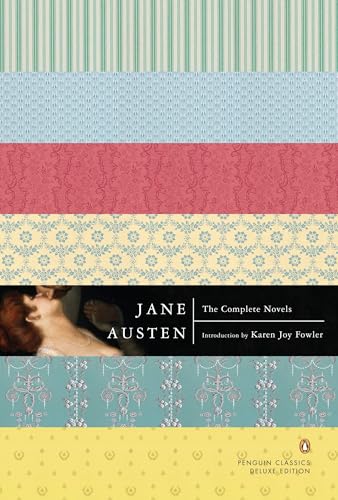
Book Review: The Complete Novels by Jane Austen

The Complete NovelsThe Complete Novels by Jane Austen
My rating: 3 of 5 stars

The novels of Jane Austen are among some of the most beloved, most read, and most adapted from the English language. Featuring memorable characters, locations, and narratives the “big four” Austen novels—Sense and Sensibility, Pride and Prejudice, Mansfield Park, and Emma—all have similar narrative clichés, but all done in unique ways that makes each story fresh. The later three novels are a mixed back of youthful inexperience (Northanger Abbey), different tone (Persuasion), and unique literary style (Lady Susan) with mixed results. Overall, this is a great collection especially as it has all four of Austen’s major works together.

Sense and Sensibility (3.5/5)
Pride and Prejudice (4/5)
Mansfield Park (3.5/5)
Emma (2/5)
Northanger Abbey (1/5)
Persuasion (3/5)
Lady Susan (2.5)

View all my reviews

Tuesday, June 29, 2021

Review: Lady Susan by Jane Austen


Lady Susan by Jane Austen
My rating: 2.5 out of 5 stars

A beautiful middle-aged recent widow is on the prowl for a young man for herself and one to take her despised daughter off her hands. Lady Susan is the last complete work of Jane Austen published, over 50 years after her death, in which the titular character is annoyance to her family.

Lady Susan Vernon, a beautiful and charming recent widow, visits her brother- and sister-in-law, Charles and Catherine Vernon, with little advance notice at Churchill, their country residence. Catherine is far from pleased, as Lady Susan had tried to prevent her marriage to Charles and her unwanted guest has been described to her as “the most accomplished coquette in England”. Among Lady Susan's conquests is the married Mr. Manwaring. Catherine's brother Reginald arrives a week later, and despite Catherine's strong warnings about Lady Susan's character, soon falls under her spell. Lady Susan toys with the younger man's affections for her own amusement and later because she perceives it makes her sister-in-law uneasy. Her confidante, Mrs. Johnson, to whom she writes frequently, recommends she marry the very eligible Reginald, but Lady Susan considers him to be greatly inferior to Manwaring. Frederica, Lady Susan's 16-year-old daughter, tries to run away from school when she learns of her mother's plan to marry her off to a wealthy but insipid young man she loathes. She also becomes a guest at Churchill. Catherine comes to like her—her character is totally unlike her mother's—and as time goes by, detects Frederica's growing attachment to the oblivious Reginald. Later, Sir James Martin, Frederica's unwanted suitor, shows up uninvited, much to her distress and her mother's vexation. When Frederica begs Reginald for support out of desperation (having been forbidden by Lady Susan to turn to Charles and Catherine), this causes a temporary breach between Reginald and Lady Susan, but the latter soon repairs the rupture. Lady Susan decides to return to London and marry her daughter off to Sir James. Reginald follows, still bewitched by her charms and intent on marrying her, but he encounters Mrs. Manwaring at the home of Mr. Johnson and finally learns Lady Susan's true character. Lady Susan ends up marrying Sir James herself, and allows Frederica to reside with Charles and Catherine at Churchill, where Reginald De Courcy “could be talked, flattered, and finessed into an affection for her.”

This novella is essentially the titular character playing havoc with her in-laws and their familial relations while attempting to pawn her daughter off to the richest man that will have her while looking to score an even richer man whether he is currently married or not. If this had been a full-length novel with Susan Vernon as the lead character, she would have been one of the most hated characters in the English language who is not evil incarnate. As for the other notable characters, Mrs. Vernon and Frederica were written as morale opposites to Lady Susan and came off well-written, meanwhile Reginald comes off as a fool and is played like one by Susan through much of the story.

Lady Susan was completed by Jane Austen 17 years before her more famous works were published and itself published over 50 years after her death. It’s short length is one of it’s best features as the titular character would not be someone a reader would want to follow for an entire novel.

Monday, June 14, 2021

Review: Persuasion by Jane Austen


Persuasion by Jane Austen
My rating: 3 out of 5 stars

A young woman listens to her elders and mentors that the man she loves is not a good—social—match for her and breaks her engagement, she regrets it ever since. <i>Persuasion</i> is the last completed novel of Jane Austen that was published after her death, which follows a woman who must interact with her former fiancée now a war hero.

The story begins seven years after the broken engagement of Anne Elliot to Frederick Wentworth, the middle daughter of Sir Walter Elliot of Kellynch Hall and a young undistinguished naval officer with a low social standing. Anne's father and her older sister, Elizabeth, maintained that Wentworth was no match for a woman of their family and Lady Russell, a distant relative whom Anne considers to be a second mother, sees the relationship as imprudent for one so young and persuaded Anne to break off the engagement. All this happens when Anne's younger sister Mary was away at school. The story begins the Elliot family is in financial trouble on account of their lavish spending, so they rent out Kellynch Hall and decide to settle in a cheaper home in Bath until their finances improve. Sir Walter, Elizabeth, and Elizabeth's new companion, Mrs. Clay, look forward to the move; Anne is less sure. Mary is married to Charles Musgrove of Uppercross Hall, the heir to a respected local squire. Anne visits Mary and her family, where she is well-loved. As the war against France is over, the tenants of Kellynch Hall, Admiral Croft and his wife Sophia—Frederick’s sister—have returned home. Wentworth, now wealthy and famous for his service in the war, visits his sister and meets the Uppercross family where he crosses paths with Anne. The Musgroves, including Mary, Charles, and Charles' sisters Henrietta and Louisa, welcome the Crofts and Wentworth, who makes it known that he is ready to marry. Anne still loves Wentworth, so each meeting with him requires preparation for her own strong emotions. She overhears a conversation in which Louisa tells Wentworth of Charles first proposed to Anne, who turned him down. This news startles Wentworth, and Anne realizes that he has not yet forgiven her for letting herself be persuaded to end their engagement years ago. Anne and the young adults of the Uppercross family accompany Wentworth on a visit to see two of his fellow officers, Captains Harville and Benwick, in the coastal town of Lyme Regis. Benwick is in mourning over the death of his fiancée, Harville's sister, and he appreciates Anne's sympathy and understanding. They bond over their mutual admiration for the Romantic poets. Anne attracts the attention of Mr William Elliot, her cousin and a wealthy widower who is heir to Kellynch Hall despite having broken ties with her father years earlier. On the last morning of the visit, the youthful Louisa sustains a serious concussion at the sea wall while under Capt. Wentworth's supervision. Anne coolly organizes the others to summon assistance. Wentworth is impressed with Anne's quick thinking and cool headedness, but feels guilty about his actions with Louisa, causing him to re-examine his feelings for Anne. Louisa, due to her delicate position, is forced to recover at the Harvilles' home in Lyme for months. Benwick, who was a guest as well, helps in Louisa's recovery by attending and reading to her, resulting in them getting engaged. Following Louisa's accident, Anne joins her father and sister in Bath with Lady Russell while Louisa and her parents stay at the Harvilles' in Lyme Regis for her recovery. Wentworth visits his older brother Edward in Shropshire. Anne finds that her father and sister are flattered by the attentions of their cousin William Elliot, secretly believing that if he marries Elizabeth, the family fortunes will be restored. William flatters Anne and offhandedly mentions that he was "fascinated" with the name of his future wife already being an "Elliot" who would rightfully take over for her late Mother. Although Anne wants to like William, the attention and his manners, she finds his character opaque and difficult to judge. The Crofts arrive in Bath with the news that Louisa engagement to Benwick. Wentworth travels to Bath, where his jealousy is piqued by seeing William trying to court Anne. Wentworth and Anne renew their acquaintance. Anne visits Mrs Smith, an old school friend, who is now a widow living in Bath under strained circumstances. From her, Anne discovers William's true nature. The Musgroves visit Bath to purchase wedding clothes for Louisa and Henrietta—long engaged to a cousin—both soon to marry. Wentworth and Harville encounter them and Anne at the Musgroves' hotel in Bath, where Wentworth overhears Anne and Harville discussing the relative faithfulness of men and women in love. Deeply moved by what Anne Wentworth writes her a note declaring his feelings for her. Outside the hotel, Anne and Wentworth reconcile, affirm their love for each other, and renew their engagement. William leaves Bath with Mrs Clay soon following him to become his mistress, ensuring that he will inherit Kellynch Hall. Lady Russell admits she was wrong about Wentworth and befriends the new couple. Once Anne and Wentworth have married, Wentworth helps Mrs Smith recover the remaining assets that William had kept from her. Anne settles into her new life as the wife of a Navy captain.

A lot of things happen in a short about of pages, but Austen’s writing made it all come together well. Anne is not the greatest protagonist that Austen has written but given she comes after Emma and Catherine she is welcome change especially since she is older than most, if not all, of Austen’s other protagonists. None of the other characters really stand out, but it was interesting that Anne’s younger sister Mary was written as the annoying character instead of the usual widowed or unmarried older relative.

<i>Persuasion</i> is a fine novel, while it is not Jane Austen’s best work it is not her worst either. While I would not recommend it as your first Austen novel to read, I would recommend it if you’ve enjoyed one of her best works..

Thursday, June 10, 2021

Book Review: The Hunchback of Notre Dame by Victor Hugo

The Hunchback of Notre DameThe Hunchback of Notre Dame by Victor Hugo
My rating: 3 of 5 stars

When the publication of a novel results in a major restoration effort for a centuries old Gothic church that features as a significant secondary character, it must be a special book. The Hunchback of Notre Dame is Victor Hugo’s first novel that established him as one of the greatest French writers.

The story is set in Paris in 1482 during the reign of Louis XI. The beautiful gypsy Esmeralda captures the hearts of many men, including those of Captain Phoebus and Pierre Gringoire, but especially Quasimodo and his guardian Archdeacon Claude Frollo. Frollo is torn between his obsessive lust for Esmeralda and the rules of Notre Dame Cathedral. He orders Quasimodo to kidnap her, but Quasimodo is captured by Phoebus and his guards, who save Esmeralda. Gringoire, who attempted to help Esmeralda but was knocked out by Quasimodo, is about to be hanged by beggars when Esmeralda saves him by agreeing to marry him for four years. The following day, Quasimodo is sentenced to be flogged and turned on the pillory for two hours, followed by another hour's public exposure. He calls for water. Esmeralda, seeing his thirst, approaches the public stocks and offers him a drink of water. It saves him, and she captures his heart. Later, Esmeralda is arrested and charged with the attempted murder of Phoebus, whom Frollo attempted to kill in jealousy after seeing him trying to seduce Esmeralda. She is sentenced to death by hanging. As she is being led to the gallows, Quasimodo swings down by the bell rope of Notre-Dame and carries her off to the cathedral, temporarily protecting her – under the law of sanctuary – from arrest. Frollo later informs Gringoire that the Court of Parlement has voted to remove Esmeralda's right to the sanctuary so she can no longer seek shelter in the cathedral and will be taken away to be killed. Clopin, the leader of the Vagrants, hears the news from Gringoire and rallies the homeless citizens of Paris to charge the cathedral and rescue Esmeralda. When Quasimodo sees the Vagrants, he assumes they are there to hurt Esmeralda, so he drives them off. Likewise, he thinks the king's men want to rescue her, and tries to help them find her. She is rescued by Frollo and Gringoire. But after yet another failed attempt to win her love, Frollo betrays Esmeralda by handing her to the troops and watches while she is being hanged. When Frollo laughs during Esmeralda's hanging, Quasimodo pushes him from the height of Notre Dame to his death. With nothing left to live for, Quasimodo vanishes and is never seen again. Quasimodo's skeleton is found many years later in the charnel house, a mass grave into which the bodies of the destitute and criminals were indiscriminately thrown, implying that Quasimodo had sought Esmeralda among the decaying corpses and lay beside her, himself to die. As the guards attempt to pull the embracing skeletons apart, his skeleton crumbles to dust.

This book is hard to judge, mainly because when the narrative and drama is going it is great but early on Hugo liked to focus on other things namely architecture then it was hard to read. While Hugo’s descriptions of Notre Dame are fantastic and are necessary considering its central importance to the book, however the history of Paris and its architecture was a tangent that slowed things down enough to make the book feel like a drag. Hugo’s characters were extremely well-written from the hypocrite Frollo to the love-sick Esmerelda to superficial jerk Phoebus and the book’s titular character Quasimodo.

The Hunchback of Notre Dame features a fantastic narrative, however some of Victor Hugo’s decisions early in the book make it struggle to get through as it veers away from any narrative flow. However, I did enjoy the book overall and would recommend it for people to read yet with a warning about things early so they are prepared to either endure it or plan skip parts of the book.

View all my reviews

Wednesday, May 19, 2021

Review: Northanger Abbey by Jane Austen


Northanger Abbey by Jane Austen
My Rating : 1 out of 5 stars

A young woman who believes fiction equals real life suddenly finds out that life is not a book, it’s worse. Northanger Abbey was the first novel completed by Jane Austen, but only published after her death.

Seventeen-year-old Catherine Morland, one of ten children of a country clergyman, grew up a tomboy but by the age of 17 she is "in training for a heroine" and is excessively fond of reading Gothic novels. She is invited by the Allens, her wealthier neighbors in Fullerton, to accompany them to visit the city of Bath and partake in the winter season of balls, theatre, and other social delights. Soon she is introduced to a clever young gentleman, Henry Tilney, with whom she dances and converses. Through Mrs. Allen’s old schoolfriend Mrs. Thorpe, she meets her daughter Isabella, a vivacious and flirtatious young woman, and the two quickly become friends. Mrs. Thorpe’s son, John is also a friend of Catherine’s older brother, James, at Oxford where they are both students. Yet soon enough the Thorpes become possessive of Catherine as John undermines her attempts to spend time with Henry Tilney and his sister Eleanor. Isabella and James become engaged. James’ father approves of the match and offers his son a country parson's living of a modest sum, £400 annually, but they must wait until he can obtain the benefice in two and a half years. Isabella is dissatisfied, but to Catherine, she misrepresents her distress as being caused solely by the delay, and not by the value of the sum. Isabella immediately begins to flirt with Captain Tilney, Henry's older brother. Innocent Catherine cannot understand her friend's behavior, but Henry understands all too well, as he knows his brother's character and habits. The Tilneys invite Catherine to stay with them for a few weeks at their home, Northanger Abbey. Catherine, in accordance with her novel reading, expects the abbey to be exotic and frightening. Henry teases her about this, as it turns out that Northanger Abbey is pleasant and decidedly not Gothic. However, the house includes a mysterious suite of rooms that no one ever enters; Catherine learns that they were the apartments of Mrs. Tilney, who died nine years earlier. As General Tilney no longer appears to be ill-affected by her death, Catherine decides that he may have murdered her or even imprisoned her in her chamber. Catherine discovers that her over-active imagination has led her astray, as nothing is strange or distressing in the apartments and is set straight by Henry. Catherine comes to believe that, though novels may be delightful, their content does not relate to everyday life. Isabella breaks her engagement to James, and its implied she is become engaged to Captain Tilney, which Henry and Eleanor Tilney are skeptical of and they turn out to be correct. Yet Catherine is terribly disappointed, realizing what a dishonest person Isabella is. The General goes off to London and the atmosphere at Northanger Abbey immediately becomes lighter and pleasanter for his absence, until he suddenly returns and forces Catherine to go home early the next morning in a shocking, inhospitable, and unsafe move that forces Catherine to undertake the 70 miles journey alone. Once home, Catherine is listless and unhappy. Henry pays a sudden unexpected visit and explains what happened. General Tilney, on the misinformation of John Thorpe, had believed her to be exceedingly rich as the Allens’ prospective heiress, and therefore a proper match for Henry. In London, General Tilney ran into Thorpe again, who, angry and petty at Catherine's refusal of his half-made proposal of marriage, said instead that she was nearly destitute. Enraged, General Tilney returned home to evict Catherine. When Henry returned to Northanger, his father informed him of what had occurred and forbade him to think of Catherine again. When Henry learns how she had been treated, he breaks with his father and tells Catherine he still wants to marry her despite his father's disapproval. Catherine is delighted, though when Henry seeks her parents’ approval, they tell the young couple that final approval will only happen when General Tilney consents, which he eventually does upon learning the truth.

The quality difference between this first Austen novel and the four that were published preceding it is astonishing, frankly because of how bad it is. Catherine is a coming-of-age young woman and acts like it, which is completely fine, however the overall story she is a part of reads like an Austen rip-off if not for the fact that it was written by Austen. The Thorpes are some of the least interesting characters Austen has written as well being some of the most loathsome though not on the level of Mrs. Norris while making Emma appear not so bad. The General comes off as a fool for believing one person say two opposite things and makes Catherine’s assessment of him as uncaring appears more accurate than Henry tries to countermand in the text.

Northanger Abbey shows some foreshadowing of Jane Austen’s style, but unfortunately it also reads like a bad rip-off novel as well that one can believe is written by the same individual that wrote her four great novels.

Saturday, April 17, 2021

Review: Emma by Jane Austen


Emma by Jane Austen
My rating: 2 out of 5 stars

A young woman believes she is a natural matchmaker and wants to spread her gift, but it turns out she might have just gotten lucky the first time. Emma is the fourth novel by Jane Austin in which the titular character attempts to improve the lives of those around her with not so successful results.

After taking credit for engineering the marriage of her friend and former governess Miss Taylor to Mr. Weston, Emma Woodhouse's believes herself a matchmaker and looks for her next target. She becomes friends with Harriet Smith with the aim of marrying her to the local vicar Mr. Elton and persuades Harriet to refuse a marriage proposal from Robert Martin, a respectable, educated, and well-spoken young farmer which upsets Emma’s long-time friend and neighbor Mr. Knightley. Elton, a social climber, believes Emma is in love with him and thinks Harriet is an inferior which only comes out after Elton proposes to and is shot down by Emma. After many cancelled plans Frank Churchill, Mr. Weston's son though adopted by his wealthy and domineering though sickly aunt, arrives for a two-week visit and makes many friends though one of them is not Knightley who believes him to be of shallow character. Frank seems flirt with Emma and the two engage in speculation with another arrival Jane Fairfax who is visiting her aunt, Miss Bates, and grandmother, Mrs. Bates, for a few months before starting a governess position due to her family’s financial situation. Elton gets married to a social climber and the new Mrs. Elton and Emma do not get along which makes the former take Jane under wing and attempt to find her a position. Frank humors Emma’s belief that Jane had a mutual attraction to her friend’s new husband, which appear to be confirmed for Emma when a piano is sent to Jane by a anonymous benefactor. The Elton’s treat Harriet poorly, but is counteracted by a gallant act by Mr. Knightley. Frank and Jane start to noticeably arrive and leave outings at opposite times, but the banter between Frank and Emma continues harmlessly until Emma thoughtlessly insults Miss Bates. Emma apologizes the next day after a scolding by Mr. Knightley, but Jane refuses to see her nor accept gifts sent when Emma learns she is ill. Emma later learns that Mrs. Elton successfully convinced Jane to be the governess to a friend of hers. Meanwhile Frank’s aunt dies from her long illness which starts a stunning chain of events as he and Jane reveal they have been secretly engaged since autumn, something is now deceased aunt would have disapproved and whose nature strained the conscious of Jane making her end the engagement. Frank’s uncle approves the marriage, and it is made public making Emma feel embarrassed she was wrong. Events then happen quickly as Emma realizes she is in love with Knightley who proposes to her after at first coming to comfort her over Frank’s engagement only to learn she was interested in Frank. Emma then wonders what to do about Harriet after ruining her hopes only to learn of happy coincidences that have make Robert Martin propose to her a second time which she accepted.

Being completely honest, through most of this novel I imagined Emma becoming a busybody aunt who continually attempts to set up her nieces and nephews like several other characters from Austen’s previous novels, though she will not be a future Mrs. Norris. The overall narrative with its twists and turns was good, but the drag that the main character had on the whole piece was hard to overcome. Of the major secondary characters Mr. Knightley insightfulness into the personalities of others and heroic quest to temper Emma’s overbearing traits for the sake of their dual nephews and nieces—children of his younger brother and her older sister—future happiness makes him the standout of the novel, though the fact that poor Harriet Smith got her happy ending after the suffering she endured because of Emma was a truly the best ending any has gotten in Austen’s writing.

Emma as both a novel and character might have their admirers, but as you can tell I am not one of them. Through Austen wrote some interesting characters and a good overall narrative, the main character just came off as too unlikeable for my tastes.

Wednesday, March 10, 2021

Review: Mansfield Park by Jane Austen


Mansfield Park by Jane Austen
My rating: 3.5 out of 5 stars

A quiet, unassuming young woman who knows her place amongst her richer relatives sees more than they do about the true characters of not only themselves but those they interact with. Mansfield Park is Jane Austen’s third published novel and one if it’s most analyzed not in the protagonist Fanny Price but also the economic situations of her family.

Fanny Price, at age ten, is sent from her impoverished home in Portsmouth to live as one of the family at Mansfield Park, the Northamptonshire country estate of her uncle, Sir Thomas Bertram. There she is mistreated by all but her elder cousin Edmund. Her aunt Norris, the wife of the clergyman at the Mansfield parsonage, makes herself particularly unpleasant which gets worse after she is widowed five years later. When Fanny is sixteen, Sir Thomas leaves to deal with problems on his plantation in Antigua, taking his spendthrift eldest son Tom. While away Mrs. Norris, looking for a husband for Maria, finds Mr. Rushworth, who is rich but weak-willed and considered stupid, and Maria accepts his proposal. The following year, Henry Crawford and his sister, Mary, arrive at the parsonage to stay with their half-sister, the wife of the new incumbent Dr Grant, enlivening life in Mansfield as Edmund and Mary start to show interest in one another. On a visit to Mr Rushworth's estate, Henry flirts with both Maria and Julia. Maria believes Henry is in love with her and so treats Mr Rushworth dismissively, provoking his jealousy, while Julia struggles with jealousy and resentment towards her sister. Mary is disappointed to learn that Edmund will be a clergyman and tries to undermine his vocation making Fanny fear that Mary's charms are blinding Edmund to her flaws. After Tom returns, he encourages the young people to begin rehearsals for an amateur performance of the play Lovers' Vows. The play provides further opportunity for Henry and Maria to flirt, but when Sir Thomas arrives home unexpectedly the play is cancelled, and Henry departs allowing Maria to go ahead with marriage to Mr Rushworth. They then settle in London, taking Julia with them. Sir Thomas sees many improvements in Fanny and Mary Crawford initiates a closer relationship with her. When Henry returns, he decides to entertain himself by making Fanny fall in love with him. Fanny's brother William visits Mansfield Park, and Sir Thomas holds what is effectively a coming-out ball for her. Although Mary dances with Edmund, she tells him it will be the last time as she will never dance with a clergyman leading Edmund to drop his plan to propose. When Henry next returns, he announces to Mary his intention to marry Fanny. To assist his plan, he uses his family connections to help William achieve promotion. However, when Henry proposes marriage, Fanny rejects him, disapproving of his past treatment of women. Sir Thomas is astonished by her continuing refusal, but she does not explain to protect Maria. To help Fanny appreciate Henry's offer, Sir Thomas sends her to visit her parents in Portsmouth, where she is taken aback by the contrast between their chaotic household and the harmonious environment at Mansfield. Henry visits, but although she still refuses him, she begins to appreciate his good features. Later, Fanny learns that Henry and Maria have had an affair that is reported in the newspapers leading to Mr Rushworth sues for divorce right on the heels of Tom falling gravely ill and leads to Julia eloping. Edmund brings Fanny back to Mansfield Park, where she is a healing influence. Sir Thomas acknowledges Fanny was right to reject Henry's proposal and now regards her as a daughter. During a meeting with Mary Crawford, Edmund discovers that Mary only regrets that Henry's adultery was discovered. Devastated, he breaks off the relationship and returns to Mansfield Park, where he confides in Fanny. Eventually the two marry and move to Mansfield parsonage. Meanwhile, those left at Mansfield Park have learned from their mistakes and life becomes pleasanter there.

Unlike the previous protagonists of Austen’s, Fanny is the outsider among her Mansfield relations and a poor to boot. However, this outsider status allows Fanny more freedom to question appearances especially when dealing with the Crawfords, who are basically jerks with barely any redeeming qualities and when a glimmer of hope that they can change present itself they decide to continue being jerks. Of all the busy-body characters in Austen’s novels that I have read, Mrs. Norris is not only the worst but also more annoying than all the others so far. Yet somehow with all this mix of characters, Austen brings out an interesting narrative that sees the poor relation of a family come out looking the best in Regency society.

Mansfield Park is a change up from Jane Austen’s previous two novels, but that does not change the quality of Austen’s writing and the wonderful narrative that highlights this story. However the standout part of this novel is Fanny Price, who so far is the best Austen protagonist that I’ve read.

Sunday, February 7, 2021

Review: Pride and Prejudice by Jane Austen


Pride and Prejudice by Jane Austen

My rating: 4 out of 5 stars

Sometimes first impressions are off the mark which causes all sorts of problems, either causing you are interest in someone who turns out not to be who you thought or missing someone who is your soulmate. Pride and Prejudice is Jane Austen’s second novel as the explores the roundabout courtship of two individuals whose first impressions of each other put them off on the wrong foot.

Just outside the village of Meryton in Hertfordshire during the Regency, bachelor Mr. Bingley arrives in the neighborhood in a rented residence, where he, his family, and friend Mr. Darcy interact with the Bennets at a local ball. Bingley friendly manner earns him popularity and becomes attracted to the eldest Bennet sister, Jane. Meanwhile the richer Darcy’s prideful demeanor is instantly disliked and the second eldest Bennet, Elizabeth, overhears him stating that she is not attractive enough to tempt him makes her prejudice against him. After Jane falls sick during a visit at Bingley’s and Elizabeth cares for her, Darcy changes his view of Elizabeth while Bingley grows fonder of Jane. The Bennets’ cousin and entailed heir Mr. Collins visits one of the Bennet girls, but after Elizabeth rejects him Collins marries her best friend Charlotte. A charming army officer, George Wickham, arrives in Meryton and relates the bad blood between Darcy and himself confirming Elizabeth's dislike of Darcy. Soon after a ball that the Bingleys hold, they depart for London with no plans to return dashing the expectation of Jane marrying Bingley resulting in her visiting the Bennet’s Aunt and Uncle Gardiner in London. Months later Elizabeth visits Charlotte and Mr. Collins in Kent where she meets Darcy’s wealthy aunt Lady Catherine de Bourgh, who expects her nephew to marry her daughter, only for Darcy and his cousin, Colonel Fitzwilliam, visit Lady Catherine at the same time. Fitzwilliam tells Elizabeth how Darcy recently saved a friend, presumably Bingley, from an undesirable match which obviously upsets Elizabeth. Later, Darcy proposes to Elizabeth, declaring his love for her despite her low social connections. She rejects him angrily, stating she could never love a man who caused her sister such unhappiness, Darcy brags about, and further accuses him of treating Wickham unjustly, which Darcy dismisses sarcastically. A day later Darcy gives Elizabeth a letter that explains his disagreements with Wickham that results in his attempt to elope with Darcy's 15-year-old sister, Georgiana, for her considerable dowry. Darcy also writes that he separated Jane and Bingley due to Jane's reserved behavior, sincerely believing her indifferent to Bingley, and because of the other members of their family. Elizabeth is ashamed by her family's behavior and her own lack of better judgement that resulted in blinded prejudice against Darcy. Some months later, Elizabeth accompanies the Gardiners on a tour of Derbyshire during which they visit Darcy’s estate Pemberley after Elizabeth ascertains that Darcy is absent only for him to return unexpectedly. Darcy is exceedingly gracious and later invites Elizabeth and the Gardiners to meet his sister, and Mr. Gardiner to go fishing. Elizabeth is surprised and delighted by their treatment, connecting well with Georgina much to Darcy’s delight. However, Elizabeth receives news that her sister Lydia has run off with Wickham and informs Darcy before she and the Gardiners depart in haste. After an immensely agonizing interim, Wickham agrees to marry Lydia. With some veneer of decency restored, the couple visit the family and Lydia tells Elizabeth that Darcy was at the wedding. Though Darcy had sworn everyone involved to secrecy, Mrs. Gardiner now feels obliged to inform Elizabeth that he secured the match, at great expense and trouble to himself. She hints that he may have had "another motive" for having done so, implying that she believes Darcy to be in love with Elizabeth. Bingley and Darcy Meryton neighborhood. Bingley proposes to Jane, who accepts. Lady Catherine, hearing rumors that Elizabeth intends to marry Darcy visits and demands she promise never to accept Darcy's proposal. Elizabeth refuses and the outraged Lady Catherine leaves. Darcy, heartened by his aunt's indignant relaying of Elizabeth's response, again proposes, and is accepted.

I don’t know why, but this Austen novel connected more than Sense and Sensibility whether it was because of Elizabeth or the overall story I don’t know. Elizabeth Bennet read as a more rounded character than either of the Dashwood sisters with both agency and a willingness to change. The latter is also true of Mr. Darcy, who changes his view and attitudes to Elizabeth’s family as well as doing things at the beginning he would not have done before. With a few exceptions, the rest of the characters in the novel are a tad two-dimensional although well-written individually and narratively, which has a nice progression from event to another.

Pride and Prejudice might be Jane Austen’s most popular novel and after reading it I can tell why, Elizabeth Bennet is an instantly relatable and likeable character that grows throughout the book through a narratively enjoyable progress.

Monday, January 25, 2021

Book Review: A History of My Times by Xenophon

A History of My TimesA History of My Times by Xenophon
My rating: 3 of 5 stars

Thucydides’ The Peloponnesian War ends suddenly with seven more years to go, one man decided to pick up the history and its aftermath which for centuries many readers were grateful for. A History of My Times by Xenophon sees the end of the Second Peloponnesian War and follows the aftermath of that devastating war which saw hegemony move from Sparta to Thebes.

Xenophon begins his history right where Thucydides’ left off and the first two books of the work cover the last seven years of the Peloponnesian War, which saw the return of Alcibiades to the Athenian military and the resultant Athenian naval victories before his second exile and the rise of the Spartan navy that led to the fall of Athens and the establishment of the 30 tyrants allied to Spartan hegemony. The internal politics of Athens took centerstage as the reign of the tyrants resulted in a civil war that saw the restitution of Athenian democracy. Book 3 looks at Spartan politics and the campaign of King Agesilaus to Asia Minor to fight the Persians. Book 4 sees the Persians bribe Sparta’s traditional allies and enemies to unite to attack Spartan hegemony as well as end Agesilaus’ campaign. The resulting Corinthian War continues through Book 5 when both sides accept terms by the Persian King in the so-called “King’s Peace”, however five years later a Spartan general captured the Theban acropolis resulting in Sparta controlling the politics of the city until a band of exiles retakes the city and begins reestablishing the Boeotian League with the resulting Boeotian War. Book 6 sees the end of the Boeotian War and Spartan hegemony with the Battle of Leuctra, which inaugurates the short-lived Theban hegemony. Book 7 sees Sparta and Athens ally to battle Theban hegemony even as the former is convulsed with internal rebellion and outside Peloponnesian resistance allowing Thebes to invade the Spartan homeland. The work ends with the second Battle of Mantinea which was a tactical Theban victory but strategic defeat that saw the end of Theban hegemony with all the major powers of Greece weakened from decades of fighting.

In his introduction of the book, George Cawkwell essentially said this history of Greece by Xenophon was a memoir that was circulated amongst his friends who knew all the details of the events Xenophon was writing about. Meaning that modern-day readers like myself are totally in the dark and basically Cawkwell would have to fill us in with his footnotes thanks to other sources from the era that essentially showed that Xenophon was an Athenian-born Spartan partisan and Agesilaus’ fanboy. Though Xenophon mentioned his adventure with the Ten-Thousand expedition against Artaxerxes II, he does not go into it given he had already written the Anabasis and given full details though it might be a better read then this book.

A History of My Times for centuries was thought to be “the” history of the end of the Peloponnesian War and the early 4th Century B.C., but after other sources came to light it turns out Xenophon left a lot of things out. This does not mean that the book is totally worthless, however it needs to be read critically.

View all my reviews

Sunday, January 10, 2021

Review: Sense and Sensibility by Jane Austen


Sense and Sensibility by Jane Austen
My rating: 3.5 out of 5 stars

The death of their father puts two sisters’ futures in doubt, but good things might come to those who wait. Sense and Sensibility by Jane Austen is the first published novel of her literary career, though initially anonymously, but has been a favorite with readers for over two centuries.

Elinor and Marianne Dashwood are the two eldest daughters of Henry Dashwood’s second marriage whose lives and futures are diminished when he passes, and their elder half-brother John takes over the family estate then is persuaded by his greedy wife to not help his sisters and stepmother financially. The Dashwood’s sister-in-law Fanny does not like Elinor due to the relationship between her and her brother Edward Ferrars believing Elinor is after Edward’s future inheritance. The sister’s mother looks for a different place to live when a distant cousin, Sir John Middleton offers a modest cottage for them to reside, which is happily accepted. Once established, Sir John begins inviting his cousins to his house to interact with his various friends that include 35-year-old bachelor Colonel Brandon and the young bachelor Mr. Willoughby as well as his family, his wife Lady Middleton and talkative mother-in-law Mrs. Jennings. Marianne falls for Mr. Willoughby and believes they are nearly engaged while perceiving Colonel Brandon coolly, while Elinor navigates hopeful matches incubated by Mrs. Jennings before a visit by Edward in which he very. Weeks on, Sir John brings his other distant cousins of Mrs. Jennings, Anne and Lucy Steele, to his home for a visit. During which Lucy and Elinor become friendly when Lucy lets her know she is engaged to an Edward Ferrars that Elinor presumes to not be her Edward, but evidence proves the reverse. Mrs. Jennings convinces Elinor and Marianne to accompany her to London whereon arrival Marianne writes several letters to Willoughby, which go unanswered until after meeting him and his fiancé at a dance that results in a letter from Willoughby that curtly cuts off all communication with her while including everything she sent and gave him. Brandon arrives soon after and relates to Elinor that Willoughby seduced, impregnated, then abandoned Brandon’s young ward, Miss Eliza Williams resulting in Willoughby’s aunt disinheriting him thus leading to his engagement to another woman, so Marianne knows of Willoughby’s true character. The Steele sisters come to London through an invitation of Mrs. Jennings, but upon meeting John and Fanny Dashwood they are invited to their London house. Anne betrays Lucy’s secret engagement to Edward to Fanny resulting in them being cast out of the house while Edward is ordered by his wealthy mother to break off the engagement, but he believes it dishonorable and is disinherited. Admiring Edward’s conduct, Brandon offers him the clergyman’s income for the Delaford parsonage so he can marry Lucy after he takes orders. Mrs. Jennings takes the Dashwood sisters to her second daughter’s home where a still distraught Marianne takes a walk in the rain and becomes dangerously ill so much so it’s believed her life is in danger and a visiting Brandon volunteers to bring Mrs. Dashwood to Marianne. Willoughby arrives, revealing to Elinor he genuinely loved Marianne and is miserable which elicits Elinor’s pity because his choice made him unhappy but is disgusted by how he talks of Miss Williams and his own wife. Marianne recovers from his illness and is told of Willoughby’s visit which results in Marianne realizing she would never by happy with Willoughby’s immoral, erratic, and inconsiderate ways. She values Elinor's more moderated conduct with Edward and resolves to model herself after her courage and good sense. Edward later arrives and reveals that, after his disinheritance, Lucy jilted him in favor of his now wealthy younger brother, Robert. Elinor is overjoyed. Edward and Elinor marry, and later Marianne marries Colonel Brandon, having gradually come to love him. The two couples live as neighbors, with both sisters and husbands in harmony with each other.

Overall, my first Austen novel was a good read as I found the main characters readable and the secondary characters full of interesting quirks and backstories though Lucy Steele’s manipulative and scheming that slowly comes out throughout her appearances. If there is a good starting point when reading Austen, it appears her first published novel is perfect.

Sunday, December 13, 2020

Book Review: The Prose Edda by Snorri Sturluson

The Prose Edda: Tales from Norse MythologyThe Prose Edda: Tales from Norse Mythology by Snorri Sturluson
My rating: 5 of 5 stars

The Norse mythology that has come down to us, is primarily thanks to one Icelandic scholar and politician. The Prose Edda is Snorri Sturluson’s attempt to compile the myths of the Northern world and save the knowledge of how skaldic poetry is composed.

The book is essentially divided into two parts, the first is strictly concerned with mythology and the second is a mix of mythology and learning the rules of skaldic poetry. While Snorri follows the examples of Virgil and Geoffrey of Monmouth of connecting the Norse gods to originally being refugees of Troy that uncivilized tribes were awed by and made into gods, his prose retelling of the Norse myths seen in The Poetic Edda is not only exceptionally good but was most well-known versions for centuries. In fact, Snorri includes more myths than what appears in The Prose Edda including more that relate to Loki and Sif and others. The second half which features Snorri telling the rules of skaldic poetry by using mythic and saga verses is an easy, quick read that those not really interested will not find daunting in finishing the book but adds to the overall knowledge of skaldic tradition if one reads The Poetic Edda after Snorri’s book.

Unlike The Poetic Edda in which readers are not really sure how much Christianization has leaked into the versions written in, the reader knows from the beginning that Snorri is threading the edge of being a Christian and attempting to preserve his cultures pagan heritage. Brodeur’s translation not only reads well with occasional footnotes when giving meanings to words, but the spellings that the 21st Century reader knows of the various god’s names are the same.

The Prose Edda is the primary source of the vast majority of what we know today of Norse mythology and that alone recommends this book to those interested in mythology of any type.

View all my reviews

Sunday, November 29, 2020

Book Review: The Poetic Edda: The Heroic Poems

The Poetic Edda: The Heroic PoemsThe Poetic Edda: The Heroic Poems by Anonymous
My rating: 3 of 5 stars

While Norse mythology has seen an increase of interest in the past half century, not so it’s heroic sagas though as seen in this book there is a reason for that. The Poetic Edda: The Heroic Poems is half of a collection of anonymously written poems from across the Norse world and translated in the early 20th Century by Henry Adam Bellows.

The heroic poems are divided into three lays or cycles: Helgi, Niflung, and Jormunrekkr. The first three poems feature the early Danish hero, Helgi, through all of them cover some of the same events. The overwhelming number of poems are a part of the Niflung cycle which is a Norse rendition of the German heroic epics connected with Siegfried—of Wagner operatic fame. The final two poems are about the revenge against Jormunrekkr by two brothers of the wife he killed as incited by their mother Guthrun from the Niflung cycle.

While some individual poems are good, “Atlamol en Gronlenzku” being one example, many more are pieced together and or cover the same events though written by different writers. Once you have read several poems in a row about the same events or one explicit event, all the poems are lessened in quality. After a while, one is looking to see how different writers create different ways to cover the same thing but grow quickly unimpressed especially when Bellows explains in introductions or footnotes that some lines are probably from a different poem.

Overall, this is a very well translated collection of poems, some of which are very good, however do to the fact many of the cover the same things over and over the overall collection because burdensome to read.

View all my reviews

Wednesday, November 11, 2020

Book Review: War and Peace by Leo Tolstoy

War and PeaceWar and Peace by Leo Tolstoy
My rating: 3 of 5 stars

The balance between tradition and reform, of the long influence of French culture and simmering Russian nationalism through the course of the Napoleonic Wars is seen through the eyes of numerous noble Russians from 1805 to the end of the French invasion in 1812. War and Peace is considered Leo Tolstoy’s greatest work as it follows the lives of youthful and idealistic Russian nobles as they attempt to find their way in society and the world during times that would be defined by one man who spanned across Europe to their doorsteps.

The saga begins in the Russian Empire in 1805. When Pierre Bezuknov, Natasha Rostov, and Andrei Bolkonsky are first introduced with all their youthful ambition, despite their privileged circumstances, is to find meaning in their lives. Kind-hearted but awkward Pierre, the illegitimate son of Russia's richest man, wants to change the world for the better. The spirited Natasha is searching for true love, while handsome and gallant Andrei, frustrated with the superficiality of society, seeks a higher purpose. At the same time, the French army under Napoleon edges ever closer to Russia's borders. Natasha's older brother Nikolai joins the Imperial Russian Army immediately and matures during the war against Napoleon. Like Pierre, Natasha, and Andrei, he also experiences romantic vicissitudes: despite his childhood love for his cousin Sonya, his impoverished parents insist he marry a rich bride like the superficial Julie Karagina or the religious Marya Bolkonskaya. Having begun with Napoleon's military campaign against Russia and Austria in 1805, the story concludes in 1812 after Napoleon's invasion of Russia has failed and he has retreated and withdrawn from Russian territory. The families at the center of the saga have undergone major changes and lost members, but those remaining have experienced a transformation and a new life, with new growth and new families started.

The sprawling narrative that Tolstoy constructs around his characters and locations varying from Moscow, St. Petersburg, various Russian estates, and battlefields spanning Austria, Poland, and Russia is wonderful. Unfortunately it is marred by Tolstoy’s decision to lecture the reader on his view of history as opposed to other interpretations not only took me out of the book—even though half my reading is history—but allowed me to think about the characters and the narrative he was having them go through resulting me quickly finding them fools and idiots who essentially deserve all the bad things that happen to them, except Sonya who is Tolstoy’s emotional whipping horse. The introduction by Pat Conroy and the afterword by John Hockenberry in the Signet Classics edition are completely worthless and if you get this edition ignore them.

War and Peace is a great book if not for Tolstoy’s narrative disrupting historical lecturing that takes your attention away from large tapestry that he created thus exposing foolishness of his characters.

View all my reviews

Friday, October 23, 2020

Book Review: The Poetic Edda: The Mythological Poems

The Poetic Edda: The Mythological PoemsThe Poetic Edda: The Mythological Poems by Anonymous
My rating: 4 of 5 stars

The second half of the 20th Century has seen a rise in popularity of Norse mythology through various pop culture entities even though the number of sources were few and knowledge of them not widespread. The Poetic Edda: The Mythological Poems is half of a collection of anonymously written poems arranged soon after the Christianization of Scandinavia that focuses on the Norse pantheon and translated in the early 20th Century by Henry Adam Bellows.

The mythological poems range from the creation of the world to the twilight of the gods to everything in between about the Norse gods most notably Odin, Thor, and Loki. The opening poem “Voluspo” gives a timeline of Norse cosmology that many with barely a hint of Norse beliefs will guess. The cosmology of the Norse was further expounded in “Vafthruthnismol”, “Grimnismol”, and “Alvissmol” through various devices. One of the surprising poems is how much Thor is made fun of by everyone via insult like in “Harbarthsljoth” or put in hilarious situations like in “Thyrmskvitha” which features Thor in drag before getting his revenge, though Thor isn’t a complete fool as will be found in the aforementioned “Alvissmol”. Loki is one of the prime characters in “Thyrmskvitha” and “Lokasenna” though he plays a significant part at the end of the Norse cosmology with himself and his children.

Unfortunately, how much Christianization creeped into these poems by the time they were written down or changed as they were written down is unknown and thus 100% authenticity is not known. Bellows’ translation reads very well, and his footnotes are excellent, the only thing that a 21st Century reader might have an issue with is that instead of spelling Odin as we do now Bellows spells it Othin and there are other words where it seems this is the case as well.

Overall, this is a fantastic translated collection of mythological poems that gives the reader a very good overview of Norse cosmology.

View all my reviews

Sunday, August 16, 2020

Book Review: Parallel Lives by Plutarch

Parallel LivesParallel Lives by Plutarch
My rating: 4 of 5 stars

Roughly 1800 years ago, a biographer and historian decided to compare the great men of Greece and Rome to one another to give his readers inspiration to follow their example or what to avoid. Parallel Lives by Plutarch chronicles the lives of the greatest men of the ancient world and the times they lived in.

To show the influence of character—good or bad—of the great men of more remote past of Greece and the more recent past of Rome was Plutarch’s main aim in his biographies of these great men especially when he compared them to one another. Yet throughout his writing he shows the times these great men lived to the benefit of readers today that might know the overall history, but not the remarkably interesting details or events that general history readers might never know about. The usual important suspects like Alexander, Julius Caesar, and their like but it was those individuals that one never heard of today especially those Greeks between the end of the Peloponnesian War and its takeover by Rome save Alexander. This revised edition of the John Dryden translation contains both volumes in one book resulting in almost 1300 pages of text thanks to the fact that they added four lives that Plutarch wrote independent of his parallel pairs which included a Persian monarch, yet this printing is of poor quality as there are missing letters throughout which does slow reading down for a moment.

Parallel Lives is a fascinating series of biographies of individuals that in the second century AD were the greatest men in history to those living at the time, a few of which have continued to our time. Plutarch’s prose brings these men to life as well as the times they live in and influenced which history readers would appreciate a lot.

View all my reviews