Friday, June 5, 2015

Book Review: Washington: A Life by Ron Chernow

Washington: A LifeWashington: A Life by Ron Chernow
My rating: 5 of 5 stars

The life of George Washington is not the stoic, myth-laden journey most people have fixed in their minds.  As revealed in Ron Chernow’s excellent biography, the stoic man in paintings hid an emotional complex man who went from being a loyal British subject for the first two-thirds of his life to the individual who brought a new nation into being over nearly a quarter century.

Chernow beings by putting Washington not only into the context of his times, colonial Virginia, but also into the family dynamic he grew up and developed in.  The first son of his father’s second marriage, Washington’s father died young like many of his forbearers leaving a void in his life that he filled with his oldest half-brother Lawrence.  It was his brother’s service in the Royal Naval that would direct Washington to desire military success when he was a young man.  However, Washington would lose his brother at an early age in a string of emotionally sting but ultimately fortuitous deaths that shaped his life.

Beginning with his brother Lawrence, Washington had the good fortune of finding and befriending influential people throughout his life.  Learning early on, in trial and error, to be willing to service while not appearing to strive for service, Washington was able to climb into more influential circles than it had been thought possible at his birth.  Even as he cherished getting military glory, Washington quickly took advantage of business opportunities throughout his life but especially land speculation and purchases.

Chernow faithfully follows the course of Washington’s life, but instead of just going from one high or low point to the next he fills in the details thanks to the massive amount of material he researched through Washington’s papers.  Beginning in the French and Indian War, that he essentially started, Washington never truly found the glorious military moment he aspired to but the lessons he learned in his first war would be put to good use in the Revolution as he kept his ever rotating army together through one hardship after another.

Throughout all of his public life, Washington was plantation owner of a vast estate and holder of numerous slaves.  Throughout his time in the Continental army, the Constitutional Convention, and as President, Washington thought of Mount Vernon and how it was run.  At first attempting the try and true Virginia crop of tobacco, Washington switched to other crops and aimed to be a scientific innovative farmer to make his farms profitable but wasn’t able to establish his dream due to his public life.  Chernow did not shy away from Washington’s slavery record; instead it was a major recurring theme throughout the book that was returned to numerous times including the lead up to Washington’s final days.

In examining Washington’s last quarter century, Chernow showed how Washington’s dissatisfaction with Great Britain being with little things but eventually grew into his becoming a leader in Virginia against British taxes.  Chernow took Washington’s time leading the Continental Army to not only show his military decisions, but also his interactions with Congress which would shape his political outlook not only during but after the war for a strong central government.  Finally, Chernow proved a look into Washington’s creation of the Presidency in relation to Congress and the Judiciary, to foreign and domestic affairs based on  his experiences throughout the war and afterwards.

After finishing the book, the reader sees how Washington was uniquely qualified for the times he lived in and also a normal human being.  Chernow gives the reader not a waxwork life, but a moving one that shows it was only Washington who could have done what was needed during the last quarter of the 18th century.  If you want to find out who George Washington was beyond that he “first in war, first in peace, and first in the hearts of his countrymen” then this is the book you need to read.


View all my reviews

Wednesday, May 27, 2015

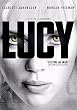
Movie Review: Lucy

Lucy


3.0 out of 5 stars Action First, Story Third Undermine Film's Potential
The action-thriller film by director/screenwriter Luc Besson has over-the-top action and thrills with chills, however actors Scarlett Johansson and Morgan Freeman were given poorly used characters and with a nonsensical story that wasn't helped by how the main and subplot were interwoven together throughout the film.
The film revolves around the titular character, Lucy (Johansson), receiving psychokinetic abilities due to a nootropic drug getting absorbed into her bloodstream. In and of itself, the plot is intriguing and gave Besson a lot play with as he wrote the script. However he cut down the potential of the film by multiplying the locations and the need to show overindulgent action sequences that were in direct opposition to the information that Professor Samuel Norman (Freeman) had relayed through exposition delivered in the lecture he was introduced in or just took up too much time like the Parisian car chase.
The introduction of Lucy at the beginning of the film in retrospect was a tell-tell sign of the problems the film would have as she is forced by her boyfriend to deliver a suitcase for him after it's handcuffed to her, the biggest problem was that instead of delivering it she could have easily bashed it upside his head and gotten the handcuff cut off. Next was her interaction with the Korean mob, which need not have taken place at all since it would have been easy to take off the handcuff and x-ray the suitcase since it was clearly too lightweight to be lead-lined. And the interruptions of lions stalking gazelles while Lucy was in the lobby was needless over-the-top foreshadowing. In fact initial setting of Taiwan wasn't really necessary with the film ending in Paris given the events taking place, it could have all taken place in Paris or ended in Seoul (or Tokyo). Without an uncomplicated process of going to one location to another, the character played by Amr Waked could played a larger part in the film as Lucy's connection to human emotion as she continues to transcend humanity with the increase of her intellectual, physical, and psychological capacities. In fact, instead of using the "10% myth" Besson could have instead used the concept of brain efficiency along with internal genetic modification by the introduced drug to help explain Lucy's changes.
Once the end credits begin, the biggest take away from Lucy is that the film could have been better given the great performances by Johansson and Freeman. But as I said at the beginning of this review, both characters were poorly used throughout a nonsensically plotted film. Instead of just a simple thriller, Besson could have created a high level psychological thriller with plenty of action but went action first and story third.

http://www.amazon.com/review/R16MCG68IV8WLB/ref=cm_cr_rdp_perm

Wednesday, May 13, 2015

Book Review: A Game of Thrones by George R.R. Martin

A Game of Thrones (A Song of Ice and Fire, #1)A Game of Thrones by George R.R. Martin
My rating: 4 of 5 stars

The rules are thrown out the window in “A Game of Thrones” as the book that started it all brings to life fantasy versions of numerous time periods with a real life flare plus a little magic.  George R.R. Martin began with well-heeled clichés then either flipped on their heads or just bulldozed them as he explores the great tale of A Song of Ice and Fire.

After an intriguing setup with ice monster, Martin completely ignored the lands beyond the Wall and focuses on the political machinations far to the south in which fantasy clichés meet hard reality.  The honorable hero (Eddard Stark), the first non-prologue character the readers encounter that must be the main protagonist (Bran Stark), and the dwarf who must be evil because he’s different (Tyrion Lannister) are just a few classic fantasy clichés that Martin completely obliterates with death, crippling, and turning out not to be an evil person at all.  All three and many more I haven’t listed point-of-view characters are given enough chapters and time in the book to come out as real people facing real challenges and responding to them based on the personalities Martin establishes for them.

Political intrigue almost a generation after a successful rebellion put a new dynasty on the Iron Throne and how characters respond to that intrigue is the major focus of the book (and thus its title).  The differences in Westerosi culture based on geography play a role throughout the book as do medieval gender roles.  Through almost 700 pages of twists and turns that covers more than a year on two different continents, the reader not only has an easy grip not only the narrative of the book but also the world its set in.  Each reader will soon have their favorite characters they’ll look forward to reading and want more of and also have their least favorite characters, which is also okay.

“A Game of Thrones” launches the reader into the world of Westeros (and Essos) and never lets them go.  From political intrigue, to secrets from the past, to a real life feel to fantasy, and just a dash of magic (DRAGONS!) George R.R. Martin’s first book of his fantasy series has something for everyone.


View all my reviews

Thursday, April 30, 2015

Book Review: Witches Abroad by Terry Pratchett

Witches Abroad (Discworld, #12; Witches #3)Witches Abroad by Terry Pratchett
My rating: 4 of 5 stars

"Witches Aboard" follows the Lancre coven across the Disc to the Big Easy, well Terry Pratchett's version of the Bayou, as they attempt to save the day by not allowing the servant girl to marry the Prince.  The happily-ever-after and fairy godmother tropes do not survive either Pratchett or Granny Weatherwax.

I will be honest, the previous Witches' book (Wyrd Sisters) wasn't my favorite Disc book and so I had reservations when beginning.  After what I felt was a stumbling start with numerous "mirror magic" asides that didn't help explain anything, the main story of the Lancre coven's cross-continental trip to the city of Genua took over and really grabbed ahold of me.  The interactions of Granny, Nanny Ogg, and Magrat amongst themselves and with "foreigners" is hilarious especially when they come into contact with the local witch in Genua, Mrs. Gogol (the voodoo priestess).  Once in Genua, the coven members realize that someone is making fairytales become real life by any means necessary resulting in a whitewash, forced-into-happiness city instead of the generally jovial one that most residents once remember.  The revelation that a relative of Granny's and the duality of fairy godmothers just adds more spicy to this story.  However, the best thing throughout is the tomcat Greebo especially when he gets into human form.

After the inconsistent start with the weird "mirror magic" explanations that really didn't help anything, the only other complaint was again Magrat's character because not only did she remain flat like in Wyrd Sisters but she was almost reduced to "minor" status by the end of the book.  Given that she is one of the titular characters, it's a bit weird seeing being less relevant than a cat.

Besides those two gripes, "Witches Abroad" is a improvement in my view over "Wyrd Sisters" in Pratchett's Discworld series.  The vast majority of the Discworld books I've read, I've enjoyed so to anyone looking to get into Discworld please don't considering my not-so-liking of the Witches books be a stain on the other Disc books.


View all my reviews

Friday, April 24, 2015

Book Review: Reaper Man by Terry Pratchett

Reaper Man (Discworld, #11)Reaper Man by Terry Pratchett
My rating: 5 of 5 stars

DEATH is not only the main character of "Reaper Man", he becomes a humorous metaphorical concept in the hands of Terry Pratchett when imagining if the Grim Reaper got replaced and the consequence to the Disc.  Pratchett is at his comical and narrative best, further developing previously established characters and introducing memorable new ones.

The Auditors, which I first learned about watching The Hogfather miniseries, make their first appearance in the Discworld novels and target DEATH because he's gained a personality.  The result DEATH is forced into retirement, it's short but he decides to learn to live in what time he's got.  While living on the farm of Miss Flitworth, DEATH learns about every day things and personal interactions as "Bill Door" all the while checking his golden watch tick down.  While DEATH is on the farm, the Auditors didn't have someone to immediately fill his position resulting in people dying but not "moving on" as in the case of Windle Poons, a 130 year old Wizard who had a more active undead "life" than his actual life.  Poons, the Wizards of the Unseen University, and many other assorted characters must contend with the build up of Life Force that could result in something that can be the death of a city.

The two plots are vaguely intertwined and only combine with one another at the very end, however each has little subplots that Pratchett uses not only to humorous but narrative effect that drives the book forward.  Honestly, I could not find a fault in this book and probably because since I've started reading Discworld I've been looking forward to reading the DEATH series of books with anticipation.  However, the time I spent reading this book has been with a smile on my face as noted by my co-workers who shared a table with me during lunches and breaks.  I can't give a better recommendation than that.


View all my reviews

Monday, April 20, 2015

Book Review: Outlaws of the Atlantic by Marcus Rediker

Outlaws of the Atlantic: Sailors, Pirates, and Motley Crews in the Age of SailOutlaws of the Atlantic: Sailors, Pirates, and Motley Crews in the Age of Sail by Marcus Rediker
My rating: 4 of 5 stars

The common man, whether he be a sailor, a slave, or a pirate is the focus of Marcus Rediker’s “Outlaws of the Atlantic”.  Rediker shows how the lowest individual influenced not only the culture of their day, but shaped the world into what it is today.

Through seven essays Rediker looks at how the daily lives of individuals who worked the Atlantic’s waters, both willingly and unwillingly, and how their experiences affected their own time and ours.  The first was the common sailor who informed “men of learning” who only went to the docks about the all the new places opening up to the European mind.  The next was following the career of a individual sailor who left a memoir of his experiences, showing the ups and downs of an average sailor’s life.  The sailor’s response to his life took many forms, some of which was social revolution in various forms.  Other individuals who lived below decks were those who did not want to be there, either convicts or enslaved individuals, who responded to their predicament by trying to escape by either running away or willingly ending their life.

Throughout the book, the term “motley crew” is used by middle- and upper-class individuals throughout the time period of Rediker’s history.  As the author explains, this was term used for a multiethnic crew of individuals.  These motley crews were involved in many “rebellions” or violent protests against what they saw as unjust practices or laws, many of these were connected to the various protests of the late 1760s and early 1770s leading up to the American Revolution.  As Rediker explains, the more well-known Sons of Liberty organizations were formed to present a better image than the low class and mixed crews.

The most informative sections of the book featured the life and public views of pirates.  Rediker details how and why piracy occurred as well as the counterculture it fostered away from the expected one that English foreign and economic policy demanded.  The most surprising element was how the Amistad Rebellion’s public reaction was influenced by the newly “romantic” image of the pirate in popular culture.

Upon finishing “Outlaws of the Atlantic” the reader has a better understanding of how the common man experienced the age of sail, either willingly or unwillingly, and how it still influences our world today.  Rediker’s essays make the reader want to know more about certain events he covered because of his thorough research and writing style, and luckily for Rediker he has written some of the books those readers could be exploring to learn more about sailors, or pirates, or rebel slaves.  I highly recommend this book to anyone wanting to learn about how life was for the majority of individuals who call the sea home during the “Age of Sail”.


View all my reviews

Wednesday, April 15, 2015

Book Review: The Once and Future King by T.H. White

The Once and Future KingThe Once and Future King by T.H. White
My rating: 3 of 5 stars

There have been many accounts of the Arthurian saga over the 1500 years, the best thought of the past century has been T.H. White's "The Once and Future King".  Though White's prose is good and engaging, the narrative arc through is tetralogy-in-one edition is problematic enough that it sometimes overshadows the wonderful characters he has developed.

The first of the four individual works, "The Sword in the Stone", is the best of all four.  White's writes wonderful characters, especially young Arthur (aka Wart), in well-rounded depth.  The narrative flow of this work is the best of any of them and sets up the reign of Arthur that makes the reader look forward to seeing what happens next.  Unfortunately in "The Queen of Air and Darkness" the characters are not well rounded and the narrative aimlessly wanders between England and the Orkneys without connecting the two until the last chapter when an evil scheme comes to fruition that the reader did not know what actually happening.  The third and longest of the individual works, "The Ill-Made Knight" focuses on an ugly Lancelot, his love affair with Guinevere, and the knightly exploits of the Round Table.  While this individual work is somewhat engaging, White emasculates Arthur both physically and mentally that continues into final individual work, "The Candle in the Wind", while other characters aren't even given much depth or story arc.

Throughout the entire writing, White injects himself and modern day elements throughout the entire book making it hard for the reader to keep to the narrative flow and maintain a "suspension of disbelief".  Another unfortunate decision by White was to insist his story was real history of a part of the medieval era then mention "the supposed Henry III" or "the supposed Richard the Lionhearted" throughout.  Also White assumed that his readers were versed in Thomas Malory's "The Death of Arthur", which I must admit a half century ago might have been the case, nowadays readers ironically look to "The Once and Future King."  And there were White's tangents, whether it was philosophy or history, that were beautifully written but had no bearing whatsoever on the plot or characters or anything else he had just written about before he went down those literary side roads.

Upon completing "The Once and Future King", I can see why many people enjoyed it and rated it highly.  However, I personally can't ignore narrative stumbles or downright tangents that made three-quarters of the book harder to read than the section covering "The Sword in the Stone".  My advice before reading T.H. White is to read Malory's book first and be prepared for references from the 1930s to the late 50s, or you'll be taken aback.


View all my reviews